

Engine Carbon Cleaning — How Endoscopes Diagnose the Problem and Verify the Fix
Carbon accumulation in modern engines has become a more prominent problem. The shift to direct injection technology across the passenger car and light commercial vehicle market has created a large population of vehicles whose intake valves accumulate carbon deposits in a way that port-injected engines did not.
Why Carbon Accumulates — and Why It Matters
In a direct injection engine, fuel bypasses the intake tract entirely and is injected directly into the cylinder. The intake valves never see fuel. Instead, they see a continuous stream of intake air mixed with crankcase ventilation gases that polymerize on the hot valve surfaces and accumulate as hard, insulating carbon deposits over time.
These deposits reduce the effective flow area through the intake port, insulate the valve from the cooling effect of intake air flow, cause misfires when deposit fragments break loose, and contribute to abnormal combustion from hot spots on the valve face.
Diagnosing Severity Before Treatment
The appropriate treatment for carbon deposits depends on their severity — which is exactly what an endoscope inspection determines.
Light deposits (engines under 60,000 miles with consistent oil change history) respond well to chemical induction cleaning: introducing a cleaning solvent into the intake system that softens and partially dissolves the carbon.
Moderate deposits require pressurized walnut shell blasting through the intake ports with the intake manifold removed. This is the standard of care for the 80,000–120,000 mile range in high-deposit-tendency engines.
Severe deposits may require valve removal for manual cleaning or replacement if the deposit has caused physical damage to the valve face or seat.
Without an endoscope inspection, the technician selects between these treatments based on mileage and reported symptoms alone. With an endoscope inspection, the selection is based on direct observation of actual deposit severity.
Post-Cleaning Verification
The endoscope's second role in carbon cleaning service is verifying the result. After walnut blasting or chemical treatment, re-inspection through the intake port confirms that deposit removal is complete — or identifies cylinders where residual deposits require additional attention before the intake manifold is reinstalled.
The before-and-after image set that endoscope inspection produces also has customer communication value. A customer who sees the condition of their intake valves before cleaning, and the restored condition after, has a concrete record of the service delivered.
EGR System Carbon Accumulation
The exhaust gas recirculation (EGR) system introduces a separate carbon accumulation pathway in diesel and some gasoline engines. EGR passages, coolers, and valves accumulate dense, sticky carbon deposits from the combustion gases they recirculate. Endoscope inspection of EGR passages through the EGR valve port shows deposit accumulation and flow restriction before symptoms become severe.
Conclusion
Carbon cleaning has become a mainstream automotive service category, and the endoscope has become the natural companion tool — for confirming the diagnosis, selecting the appropriate cleaning method, and verifying the result. Shops that have integrated before-and-after endoscope inspection into their carbon cleaning workflow report higher authorization rates, fewer callbacks, and stronger customer satisfaction scores.
Ready to see inside your engine?
Shop our automotive borescopes — built for precision engine inspection, from spark plug checks to turbo diagnostics.
Shop automotive borescopes →Inspecting engines without teardown?
Explore our automotive borescopes — articulating probes built for cylinders, turbos, and hard-to-reach engine components.
Shop automotive borescopes →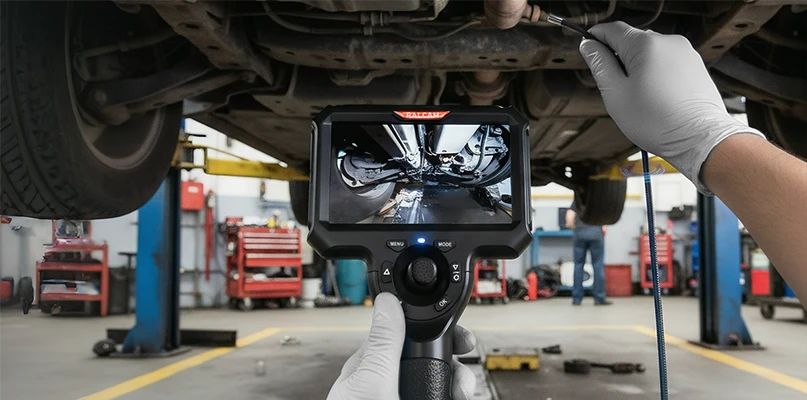
Leave a comment