Skip to content
+86 19925414237
Free shipping in the US on orders over $200
Pre-Purchase Vehicle Inspection — The Endoscope's Role in Used Car Due Diligence

Pre-Purchase Vehicle Inspection — The Endoscope's Role in Used Car Due Diligence

Buying a used vehicle is a transaction built on information asymmetry. The seller knows the vehicle's history — or at least has had longer to observe it. The buyer has a test drive, a visual inspection, and whatever a history report reveals. In the gap between what the seller knows and what the buyer can verify lies most of the financial risk in a used vehicle purchase.

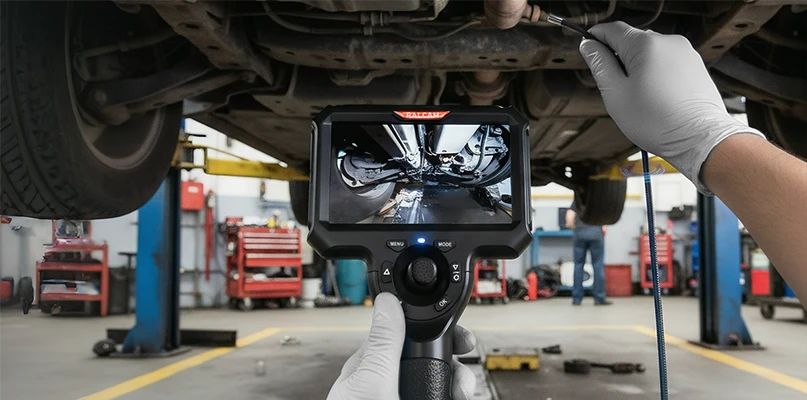
Professional pre-purchase inspections have become standard practice for informed buyers. The endoscope is rapidly becoming a standard tool in those inspections — because it closes information gaps that no other portable tool can address.


What a Test Drive and Visual Inspection Miss

A thorough pre-purchase inspection covers the basics well: fluid condition, tire wear, brake pad thickness, body panel gaps, underbody corrosion, OBD2 fault code scan. These checks eliminate many problematic vehicles from consideration before any money changes hands.

What they don't reveal is internal engine condition. A vehicle can pass every external and electronic check while harboring an engine that has experienced severe wear, prior overheating, oil starvation damage, or coolant intrusion — conditions that won't manifest in symptoms until the new owner has been driving for weeks or months.

By that point, the sale is long settled. The previous owner is unavailable or uncooperative. The buyer owns a repair bill that the purchase price didn't anticipate.


What the Endoscope Reveals in a Pre-Purchase Context

Cylinder wall condition is the most important single data point an endoscope provides in a pre-purchase inspection. Scoring, scuffing, or polishing of the cylinder wall surface indicates wear that will reduce compression, increase oil consumption, and shorten the engine's remaining service life. A cylinder wall in good condition shows a consistent cross-hatch honing pattern. Degraded cylinder walls show linear scoring (from inadequate lubrication), polishing (from overheating), or pitting (from coolant intrusion or corrosion).

Piston crown condition reveals thermal history. An engine that has been run lean, suffered coolant intrusion, or experienced detonation shows characteristic damage on the piston crown — erosion, pitting, or heat discoloration patterns that indicate abuse the odometer reading and service history don't disclose.

Coolant intrusion evidence is one of the most financially significant findings an endoscope can confirm before purchase. A head gasket failure that has allowed coolant into the combustion chamber leaves residue on the cylinder walls, piston crown, and valve faces that persists even after the engine has been partially serviced to suppress the symptoms. An endoscope finds this residue when a combustion leak test might give a borderline result.

Carbon deposit patterns indicate maintenance history more accurately than service records, which can be falsified or incomplete. A direct injection engine with unusually heavy carbon deposits on intake valves relative to its claimed mileage has been operated longer than stated, or has been run on poor fuel quality, or has consumed oil — all of which affect the vehicle's actual condition versus its represented condition.


High-Value Vehicle Inspections

The case for endoscope inspection in pre-purchase due diligence scales with vehicle value. For a $5,000 commuter car, the cost of an endoscope inspection may represent a meaningful percentage of the transaction — though even here, catching a bad engine saves significantly more than the inspection costs.

For vehicles in the $20,000–$100,000+ range — late-model luxury cars, performance vehicles, low-mileage trucks — the inspection cost is trivially small relative to the transaction value, and the potential downside of missing internal engine damage is substantial. A high-performance engine in a European sports car or a diesel powertrain in a pickup with 150,000 miles that has been worked hard represents exactly the kind of risk that an endoscope inspection can quantify.

Professional inspection services increasingly include endoscope inspection as a standard line item in premium pre-purchase inspection packages. Independent inspection businesses that have added this capability report that it has become one of their most frequently cited service differentiators — buyers specifically request it for high-value purchases.


Turbocharger Inspection

Turbocharged vehicles — now representing the majority of new vehicle production — add a specific inspection opportunity that endoscopes handle well. The turbocharger is among the most maintenance-sensitive components in a modern engine, highly sensitive to oil change interval adherence and oil quality, and expensive to replace.

Accessing the turbine and compressor sections of a turbocharger for inspection without removal requires an endoscope small enough to pass through the inlet or outlet piping. With the correct probe diameter and sufficient articulation, a technician can view the compressor wheel for tip damage and erosion, the turbine housing for carbon buildup and heat damage, and the shaft for bearing play — all conditions that predict imminent failure and represent significant repair costs.

A turbocharger inspection adds perhaps fifteen minutes to a pre-purchase inspection and provides information that distinguishes a well-maintained turbocharged vehicle from one that has been run with poor oil maintenance — a distinction that can easily represent a $2,000–$4,000 difference in repair exposure.


Practical Recommendations for Buyers

For buyers commissioning a pre-purchase inspection, specifically requesting endoscope inspection of the engine cylinders and — for turbocharged vehicles — the turbocharger is worth the additional cost on any vehicle above modest value.

For inspection businesses, adding endoscope capability to the service offering positions the business in the premium segment of the pre-purchase inspection market and provides a concrete, visual deliverable — inspection images — that supports the inspection report and justifies premium pricing.

The information that an endoscope provides in a pre-purchase context is not duplicated by any other portable inspection tool. For the buyer, it converts the largest single uncertainty in a used vehicle purchase — internal engine condition — from a guess into a documented finding.


Conclusion

Pre-purchase vehicle inspection is an information problem, and endoscopes provide information that nothing else in the portable inspection toolkit can match. For buyers, the cost of an endoscope inspection is insurance against a repair bill that could dwarf the inspection fee many times over. For inspection businesses, it is a service differentiator with genuine technical value. The used vehicle market is not short of risk; it is short of tools that quantify it accurately.

Next article Why Every Auto Repair Shop Needs an Endoscope — Not Just the Dealerships

Leave a comment

* Required fields