

Industrial Borescope Inspection Camera: The Ultimate Guide for Professionals
Introduction — The Growing Demand for Industrial Borescopes
In 2025, industrial inspection tools are evolving faster than ever. From automotive maintenance and aviation repair to HVAC and pipe diagnostics, engineers and technicians increasingly rely on industrial borescopes to inspect hidden areas without dismantling entire systems. These devices have become essential for visual diagnostics, preventive maintenance, and quality assurance.
However, buyers today face three key questions before purchasing:
- How much does an industrial borescope cost?
- What are the advantages of an articulating borescope?
- Which endoscope manufacturing companies offer the best value and reliability?
This guide will answer all three — helping you make a well-informed decision for your business.
What Is an Articulating Borescope and Why It Matters
An articulating borescope is a type of inspection camera that allows the operator to control the direction of the probe tip. Unlike rigid or fixed borescopes, articulating models feature a joystick or control lever that can bend the camera up, down, left, or right — often up to 210° or even 360° rotation.
This flexibility provides a major advantage: technicians can visually inspect complex structures (like turbine blades, engine cylinders, or curved pipelines) without disassembly.
Typical industries using articulating borescopes include:
- Automotive and aerospace (engine and turbine inspection)
- Plumbing and HVAC (pipe blockage and corrosion detection)
- Manufacturing and casting (weld and crack inspection)
Industrial Borescope Price Range in 2025
| Type | Key Features | Typical Price (USD) |
|---|---|---|
| Entry-level | 2-way articulation, 720p resolution, small display | $200–$400 |
| Mid-range | 4-way articulation, 1080p, detachable probe, 5” display | $500–$800 |
| Professional | 4-way articulation, HD recording, temperature detection, metal body | $900–$1500+ |
Factors Affecting Price:
- Articulation System: 2-way vs 4-way control can significantly affect the cost.
- Camera Resolution & Sensor Quality: Higher image clarity requires better CMOS sensors.
- Probe Diameter & Length: Thinner or longer probes increase cost due to manufacturing complexity.
- Display & Recording: Built-in 5” or 7” screens, photo/video storage, and measurement tools raise value.
- Manufacturer Origin: Chinese brands often offer the best cost-performance ratio; European and U.S. brands are priced higher but emphasize precision optics.
👉 Pro Tip: Don’t judge by price alone. An affordable industrial borescope made by a certified manufacturer can perform just as well as high-end models if it meets your inspection needs.
Key Technologies That Affect Borescope Performance
1. Articulation Mechanism
A 4-way articulating borescope allows users to steer the probe tip in any direction — ideal for accessing tight or curved spaces.
2. High-Resolution Sensors
1080p or higher CMOS sensors deliver sharp, color-accurate images, making it easier to identify small cracks or defects.
3. LED Illumination Control
Adjustable LED lighting ensures visibility in dark environments.
4. Temperature and Measurement Functions
Advanced models offer real-time temperature reading or on-screen measurement — critical for industrial maintenance applications.
5. Wireless & Data Storage
Wi-Fi-enabled borescopes allow image sharing or cloud storage, simplifying documentation and remote analysis.
Top Endoscope Manufacturing Companies
China remains a global leader in industrial endoscope manufacturing, thanks to its mature supply chain, advanced technology, and cost efficiency. Leading companies focus on R&D, offering customized articulating borescopes with 4-way control, temperature measurement, and HD displays, typically holding certifications like ISO9001, CE, and RoHS.
Japanese and German companies are renowned for optical precision and long-term durability, serving aerospace and heavy industrial markets at higher price points. U.S. and European brands prioritize software integration, AI defect recognition, and cloud reporting systems.
How to Choose the Right Manufacturer
- Check Certification: ISO, CE, RoHS are basic indicators of quality control.
- Evaluate OEM/ODM Ability: Can the factory customize features or branding?
- Inspect Samples: Real product testing beats any catalog description.
- After-Sales Service: Warranty, spare parts, and tech support matter.
Conclusion — Finding the Right Borescope for Your Business
The best industrial borescope for your application depends on three interconnected factors: technology, price, and manufacturer. Whether you’re a maintenance engineer, a distributor, or an OEM brand owner, understanding these factors ensures you make a strategic, long-term investment.
A well-chosen borescope isn’t just a tool — it’s your partner in precision inspection.
Need a reliable industrial inspection tool?
Browse our industrial borescopes and videoscopes — designed for NDT, pipeline, and machinery inspection in demanding environments.
Shop industrial borescopes →Looking for the right borescope?
Browse the full Ralcam range — industrial and automotive inspection cameras for every job.
Shop all borescopes →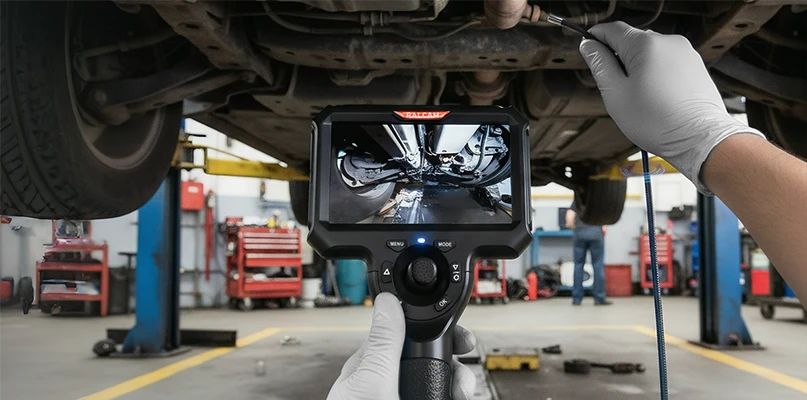
Leave a comment